


Why Empty Premium Zones Quietly Lose Sales
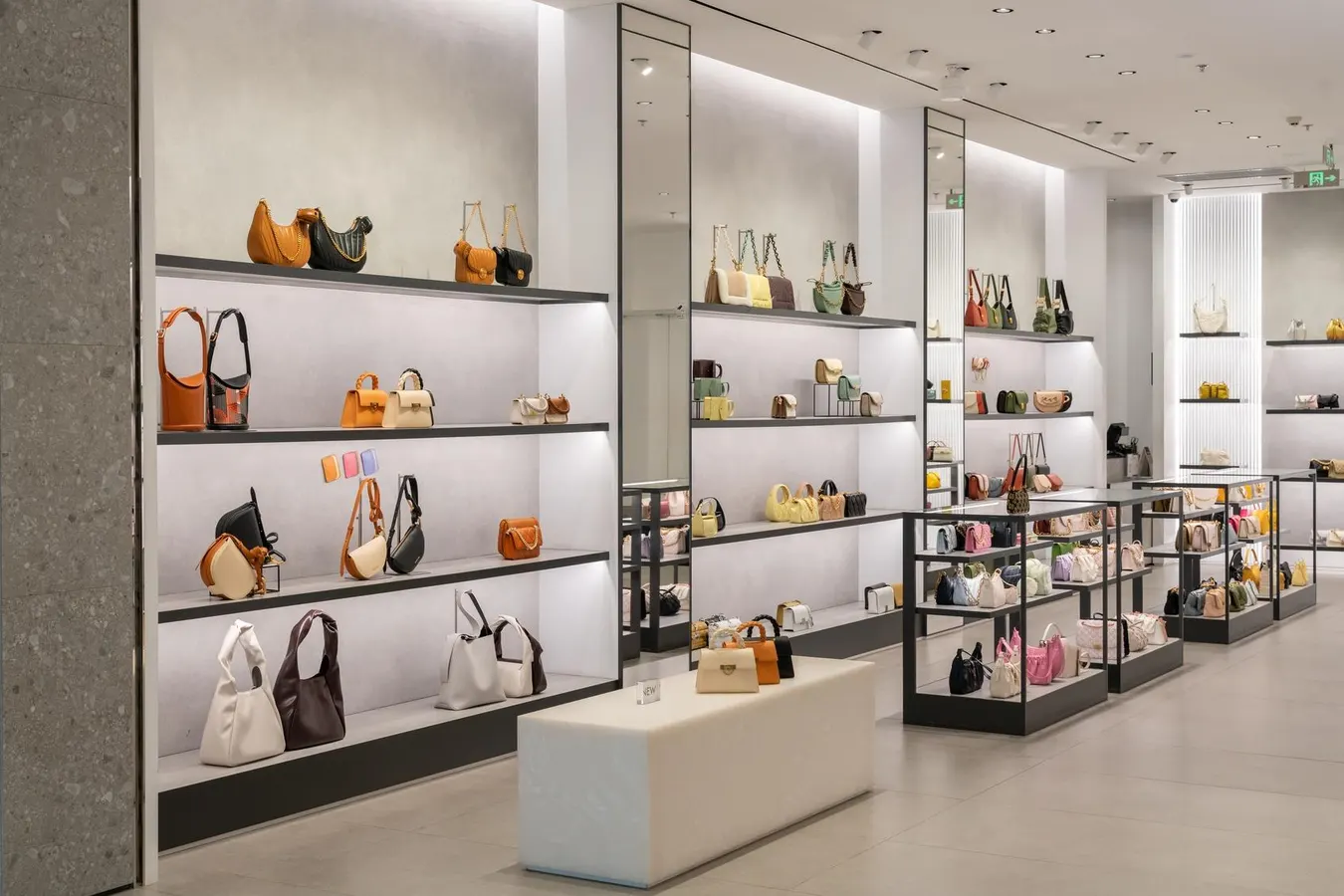
n many retail formats, certain retail sections generate higher value but require greater customer confidence to convert. Categories like beauty, electronics, and premium personal care depend more on staff presence than fast-moving staples.
Yet across multi-store networks, these zones are often left unattended for short but frequent periods, quietly affecting conversion. These gaps are not isolated. They repeat across stores and peak hours, making their impact cumulative at a network level.
This blog examines why these gaps occur and how better visibility and staffing alignment can help address them.
In practice, this creates a recurring decision problem:
When premium categories underperform, it is often unclear whether the issue is low demand or missed in-store interaction.
As a result, decisions are often made on incomplete signals, with execution gaps misattributed to demand or merchandising issues.
Role of staff presence in premium buying behaviour
In premium categories, the purchase decision typically requires in-store support:
- Customers may need help understanding product differences, validating price points, or simply feeling comfortable spending more.
- Even when shoppers do not actively ask for assistance, the visible presence of staff reduces hesitation.
- Industry observations consistently show that when premium zones are unstaffed, customer dwell time does not always fall, but conversion does.
- Shoppers continue to browse, but fewer complete purchases. Many leave the zone with unresolved questions and defer the decision altogether.
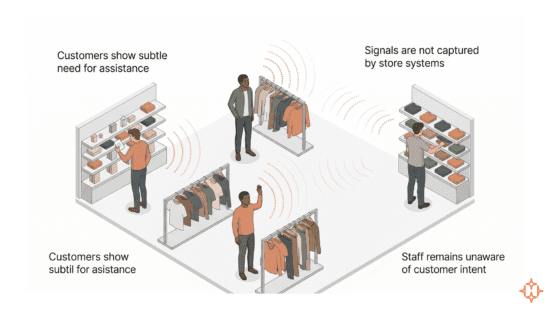
This behaviour explains why sales leakage in premium sections often goes unnoticed. Footfall looks healthy, engagement appears normal, yet revenue underperforms expectations.
| What is visible | What is not directly visible |
| Footfall remains steady | Absence of staff interaction |
| Dwell time appears healthy | Unresolved purchase intent |
| Store activity looks normal | Conversion loss |
Why unstaffed gaps are more common than assumed
Most store managers believe their teams are present in priority zones for the majority of the day. However, camera-based observations across modern trade and specialty retail formats often reveal a different picture.
- In many retailers, premium zones are frequently left unattended during key selling periods, particularly during peak hours when customer intent is highest.
- Because these absences are fragmented, they are easy to underestimate. From a human perspective, staff feel they are “mostly present.” From an operational perspective, cumulative absence becomes significant.
This mismatch between perception and reality is one of the main reasons the issue persists.
Why traditional reporting misses the problem
Most retail reporting focuses on outcomes: sales, conversion, or average ticket size. While useful, these metrics do not explain why performance changes.
They do not capture whether customers were assisted at the moment of decision or whether execution broke down during high-intent periods.
Staffing schedules may show adequate coverage on paper, but they do not capture real-time movement or zone-level presence. Manual audits and checklists provide snapshots, not continuous visibility. As a result, premium zones can remain unstaffed repeatedly without triggering corrective action.
This is why the issue often persists even in well-managed stores. Without objective visibility, it is difficult to distinguish between structural gaps and one-off exceptions.
How decisions should actually flow in-store
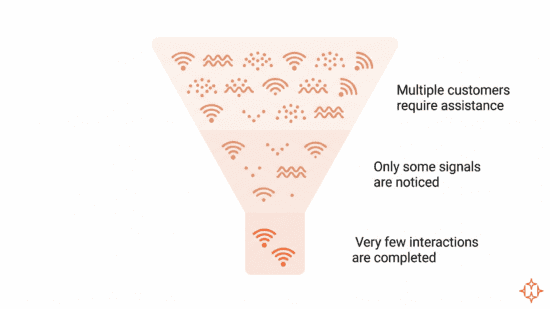
When a premium category underperforms, the decision process typically follows a sequence.
- A drop in conversion is observed
- The next step is to assess whether footfall has changed
- If footfall remains stable, engagement and dwell behaviour are considered
- If engagement remains steady, attention shifts to staff presence and interaction
- Action is then taken to align staffing with high-intent periods
Without this sequence, teams respond to outcomes without identifying the underlying cause.
Using camera analytics to guide better decisions
When retailers introduce camera analytics for zone-level visibility, patterns that were previously invisible begin to surface. Instead of relying on perception or manual checks, teams gain objective insight into how premium zones are actually staffed across store hours.
This makes it possible to identify:
- which premium zones are most frequently unattended
- when staffing gaps occur during the day
- how long these gaps typically last
- how they correlate with conversion or customer dwell behaviour
With this level of visibility, managers can make small but effective adjustments. Minor changes to shift overlap, task sequencing, or peak-hour deployment often restore staff presence without increasing headcount.
Use caseA premium personal care section in a metro store shows steady footfall and consistent dwell time, yet billing remains lower than expected. The issue is initially attributed to product assortment or pricing. Observation and interpretation Closer observation shows:
Action and outcome Once staffing is realigned to ensure presence during these high-intent periods, conversion improves without any change in traffic or assortment. |
Making in-store execution visible and actionable: HipHip.AI
Most retail systems capture outcomes such as sales, conversion, and ticket size. They do not capture what happens inside the store that leads to those outcomes.
This creates a structural gap between what is reported and what actually happens inside the store.
HipHip.AI introduces continuous visibility into in-store execution by connecting:
- customer movement within the store
- staff presence across zones
- interaction patterns during high-intent periods
This makes it possible to identify where execution breaks down, particularly in premium zones where the timing of staff presence directly influences conversion.
Instead of relying on periodic audits or assumptions, teams can understand:
- when and where customers are not being assisted
- how frequently these gaps occur
- how they align with changes in conversion
This allows store and regional teams to adjust execution staffing, task allocation, and on-floor presence based on actual store behaviour, not planned schedules.
Conclusion
Premium zones do not fail because of inconsistent demand. They fail because execution at the point of decision is neither consistently maintained nor systematically visible.
When staff presence breaks down in short, repeated intervals, the impact is not immediately apparent in store-level observation or reporting. It appears instead as a gradual drop in conversion, often misattributed to assortment, pricing, or demand.
The underlying issue is structural. Retail systems capture outcomes, but do not capture whether the conditions required for conversion were actually present.
The issue is not whether staff are present, but whether they are present at the exact moment a purchase decision is being made, and whether that moment is visible at all.
About HipHip.AI
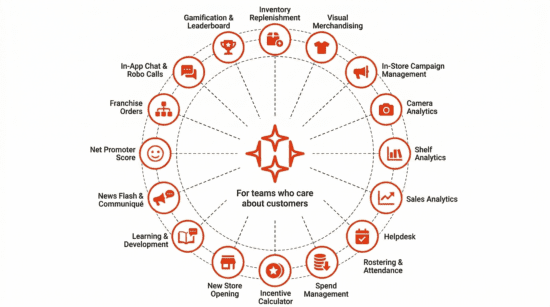
HipHip.AI is an AI-powered, end-to-end retail execution platform used across 10,000+ retail brick and mortar stores. It unifies inventory, merchandising, campaign management, store teams, and store spend into a single operating system—enabling real-time visibility and execution across stores.
Core capabilities include:
- Inventory Replenishment
- Visual Merchandising
- In-Store Campaign Management
- Camera Analytics
- Shelf Analytics
- Sales Analytics
- Helpdesk
- Task Manager
- Rostering & Attendance
- Spend Management
- Incentive Calculator
- New Store Opening
- Learning & Development
- News Flash & Communiqué
- Net Promoter Score
- Franchise Orders
- In-App Chat & Robo Calls
- Gamification & Leaderboard
HipHip.AI integrates seamlessly with existing POS, ERP, WMS, and HRMS systems, ensuring zero disruption to current infrastructure while unlocking smarter, faster retail execution.
Talk to an expert → hiphip.ai
Frequently asked questions
- If footfall and dwell time are stable, why does conversion still drop?
Because engagement does not ensure interaction. In premium categories, conversion depends on timely staff presence. When interaction is missing at the point of decision, intent does not translate into purchase.
- Why is this issue not visible in existing store reports?
Most reporting systems capture outcomes, not in-store behaviour. They show that conversion has dropped, but do not reveal whether customers were assisted, ignored, or left mid-decision.
- Is this a store-level issue or a network-wide pattern?
In most cases, it is a repeated operational pattern. Short, fragmented gaps in staff presence occur across stores and peak hours, making the impact cumulative at a network level.
- Why do staffing plans fail to reflect actual on-floor execution?
Because staffing plans are static, while store activity is dynamic. Staff are frequently pulled into billing, replenishment, or cross-zone tasks, creating unplanned gaps in high-value areas.
- What is the real cost of these short, repeated gaps?
The impact is not in a single missed interaction, but in repeated loss of high-intent conversions. Across stores and days, this compounds into measurable revenue leakage in premium categories.
- What changes when this gap becomes visible?
Retailers move from reacting to conversion drops to identifying their cause in real time. This enables targeted staffing adjustments, better alignment with demand, and improved conversion without increasing traffic.